Excerpted from the September 2012 issue of ProNetwork News, part one of a two-part series:
pronetworknews_sept2012What if Caesar had written “I came to the project site, I observed for general conformance with the Contract Documents but not for means or methods or work covered since my last visit” and then wrote a three word report? Caesar was a master of understatement and understatement leads to misunderstandings and, well, understatement. Architects have always faced liability for undiscovered construction defects but current economic times have forced many contractors out of business. With the typical lack of contractor insurance for defective work, A/E’s are the only solvent or insured pocket, leaving design professionals more vulnerable to construction defect claims than in the past.

Veni – I went to the site

Those preaching risk reduction used to urge that architects and engineers leave construction administration to construction managers and contractors. This approach allowed or even encouraged contractors, CMs, program managers and owner’s representatives to take market share for services formerly performed by A/E’s. It also missed the point. Design professionals do not seek to eliminate liability, but to manage the reasonable risks of design practice. Reasonable risks are those placed with the party able to control them.

If an owner wants an A/E to ensure perfect construction, the project is doomed to fail for two reasons. First, there hasn’t been perfect construction since the Pyramids (and they had different labor and insurance agreements in those days). Second, the A/E does not control all of the variables that go into a construction project. There are elements of construction installed and concealed by the time the A/E arrives for a weekly or monthly meeting and site tour and even the most gifted A/E is powerless to see through walls. Continue reading “Veni, Vidi, Vici, Lis Pendens: I came, I saw, I got sued – Part 1 of 2”
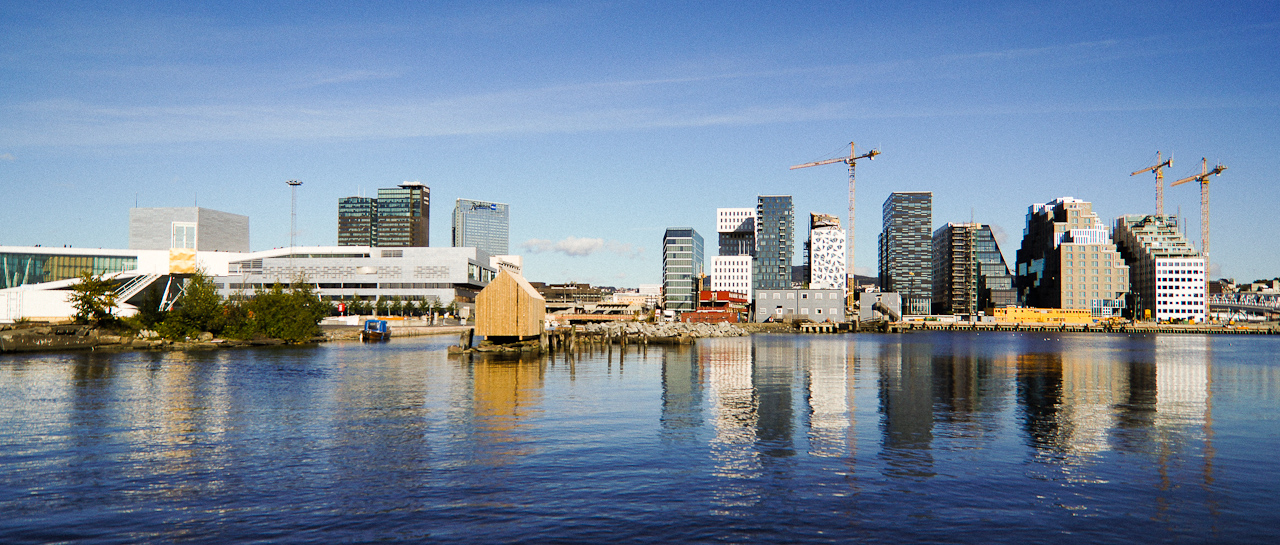
Photo by Jonathan Camp

Oslo, Norway’s waterfront has undergone major reconstruction and renovation in the last few years. Following the completion of Oslo Operahuset (white building at the left of the photo) in April 2008, developers pushed forward with several new commercial high-rises nearby. It appears that the architects of each building created a unique textile for the building’s face by utilizing a wide range of materials, colors, window patterns and building silhouettes. While nowhere near the height, number, or drama of other major world skylines, Oslo’s is fresh, clean, and has quickly become a favorite of mine.

In October alone, this eclectic and fancifully-curated blog jumped around from Pre-Islamic Civilization in Madain Saleh in Saudi Arabia to Volkswagen’s Car Towers at Autostadt in Wolfsburg, Germany to the Construction of an Amazing Underground Hotel in Songjiang and the triumph of a Polish Architect who designed the World’s Thinnest House. If your workday needs a dose of hilarity, trivia, or awe, we recommend a visit to Amusing Planet’s Architecture section straight away!

It’s true. The insurance industry has a reputation for bringing doom and gloom to an otherwise cheery outlook. Forgive us. Our business relies on our being able to spot negative trends in advance so that we can assist our clients in preparing for the worst. That doesn’t mean we don’t also hope for the best! Economic recovery is still ongoing, and we are thrilled that this means our architect and engineer clients are working and growing again.

That’s why, in our May 2012 post, To Hire or Not to Hire?, we mentioned some of the considerations and concerns facing design firms as they take on work that “could require additional hands,” including the need for accurate Professional Liability limits on their insurance policies… just a little worth-thinking-about-in-advance gloom.

Then this week, leading Professional Liability insurance provider, Victor O. Schinnerer, released its most recent Risk Management Guidelines, including an item on the Expanding Employment Liability Risks of recovering architecture and engineering firms.

“As firms downsized to face an economic downturn and restructured due to changing technology and new project delivery systems that required altered business models, employment practices claims rose. Add to that the challenges presented by the new generation of employees—many of whom consider their lives and the operations of their employers as public information, and a number of whom find the workplace to be a forum for their opinions—who are flooding the market during difficult economic times, and by returning military who must be accommodated in their former civilian positions or given preferential treatment, and firms are faced with a demanding and confusing employment perspective as they begin to staff up.”

Continue reading “Expanding Employment Liability Risks for Design Firms”

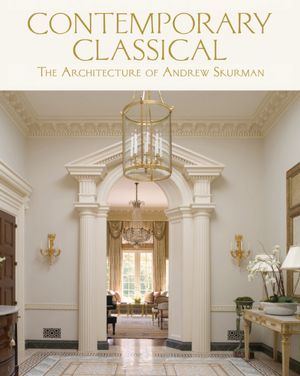
Homes designed by a/e ProNet client Andrew Skurman have been featured in a wide variety of publications, including Architectural Digest, The New York Times Magazine, Western Interiors, California Homes, San Francisco Magazine, This Old House, Luxe. Interiors + Design, House Beautiful, and Gentry Design. Work by the firm is also included in the books Napa Valley Style (2003) by Kathryn Masson and San Francisco Style (2004) by Diane Dorrans Saeks. And now, Andrew Skurman has a book of his own!

In August, Princeton Architectural Press published Contemporary Classical — The Architecture of Andrew Skurman.

Excerpted from Princeton’s website:

“Skurman draws on an extensive architectural library of European and American design with the precision of an eminent art historian, skillfully adapting timeless design elements to suit today’s lifestyles. Collaborating with well-respected contractors, interior and landscape designers, lighting and audiovisual experts, and other consultants, Skurman blends modern comfort and conveniences into traditional settings. Featuring gorgeous photography and exquisite watercolor studies, Contemporary Classical showcases an exceptional range of residential work, including projects in San Francisco (Nob Hill, Pacific Heights), the Newport Beach coast, and Northern California.”

ProNet first got wind of Skurman’s new publication from lifestyle blogger The Style Saloniste who said, in her “fall preview”:

“San Francisco architect Andrew Skurman’s new book is essential for the collections of architectural students, interior designers, potential clients, and everyone who wants to learn about classical architecture—the real thing.”

And the San Francisco Chronicle’s review of Contemporary Classical was a rave!

“One of the guilty pleasures in reading coffee-table books about stunning residences is trying to determine which homes are pictured. Locals will have fun guessing from among the 20 anonymously featured in a new book by one of San Francisco’s most respected architects. [The book] features 255 pages of colorful photos of residences inspired by his love of French chateaux and classical Greek and Roman forms….”

The book retails for $60.00, but can be purchased now on Amazon for $37.80, and would make an excellent gift for your favorite architect. Happy shopping!

Item contributed by Leslie Pancoast of a/e ProNet Member firm IOA Insurance Services in Pleasanton, California.

Excerpted from the August 2012 issue of ProNetwork News:

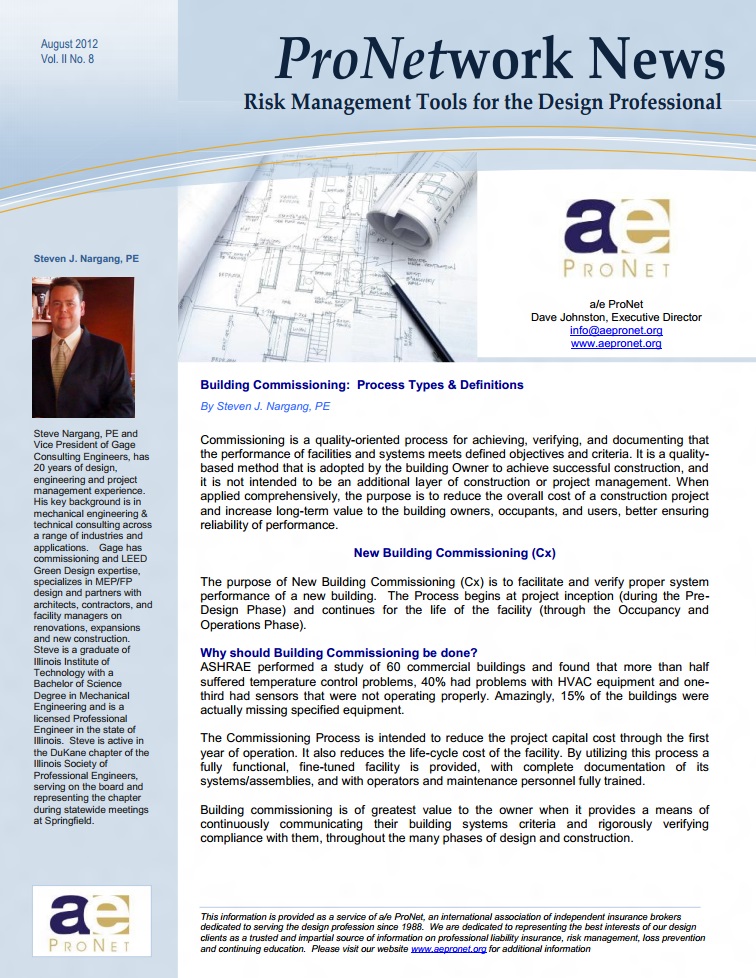
Commissioning is a quality-oriented process for achieving, verifying, and documenting that the performance of facilities and systems meets defined objectives and criteria. It is a quality-based method that is adopted by the building Owner to achieve successful construction, and it is not intended to be an additional layer of construction or project management. When applied comprehensively, the purpose is to reduce the overall cost of a construction project and increase long-term value to the building owners, occupants, and users, better ensuring reliability of performance.

New Building Commissioning (Cx)

The purpose of New Building Commissioning (Cx) is to facilitate and verify proper system performance of a new building. The Process begins at project inception (during the Pre-Design Phase) and continues for the life of the facility (through the Occupancy and Operations Phase).

Why should Building Commissioning be done?

ASHRAE performed a study of 60 commercial buildings and found that more than half suffered temperature control problems, 40% had problems with HVAC equipment and one-third had sensors that were not operating properly. Amazingly, 15% of the buildings were actually missing specified equipment.

The Commissioning Process is intended to reduce the project capital cost through the first year of operation. It also reduces the life-cycle cost of the facility. By utilizing this process a fully functional, fine-tuned facility is provided, with complete documentation of its systems/assemblies, and with operators and maintenance personnel fully trained.

Building commissioning is of greatest value to the owner when it provides a means of continuously communicating their building systems criteria and rigorously verifying compliance with them, throughout the many phases of design and construction.

Prior to design, the Commissioning Authority (CxA) will assist the Owner in evaluating the facility’s requirements regarding such issues as energy conservation, indoor environment, staff training, and operation and maintenance. Continue reading “Building Commissioning: Process Types & Definitions”

“My big question for Architecture is, Why do humans have to adapt to buildings? And why can’t Architecture adapt to humans?”

Doris Kim Sung

[youtube=http://www.youtube.com/watch?feature=player_embedded&v=-Ms5qoMO3gQ]

It is in the very nature of a trend to move on past its point of highest enthusiasm and fizzle out in favor of something else. Architecture, like everything else, goes through these periods of interest and inclination. For a long time, Sustainable Architecture–environmentally conscious design–was considered the latest trend. Now that trend is evolving.

Resilient Architecture takes the ideas behind sustainable design a step further. Metal That Breathes is one of the latest evolutionary byproducts of the new trend, and is best evidenced by the work of Architect Doris Kim Sung of the University of Southern California.

Inspired by her original interest and education in Biology, Sung used so-called “smart metal” to design and build her Bloom installation in Los Angeles. As Sung pointed out in her recent TED talk, “[Skin is] the first line of defense for the [human] body… Our building skins should be more similar to human skin.”

One author on the Core77 design blog explained Sung’s work this way:

Sung has been experimenting with thermo-bimetals, two thin layers of metal that expand and contract, in response to temperature, at different rates. Laminating two like-sized sheets of different material together and subjecting them to a temperature change causes the sheet to curl up—and this phenomenon can be exploited to create a building that ingeniously shades itself as needed, requiring no external power.

Sounds crazy, no? And it’s possible that the American market is not yet ready to explore the possibilities of this breathing metal in its regular buildings. But as Sung mentioned in her recent TED talk, at least one Chinese developer is already including the thermo-bimetal screens in its design for a house. The screens “can actually open and close as the sun moves around on that surface,” said Sung. “[This implies] that we don’t need shutters, or drapes, or blinds anymore… we can control the amount of air conditioning you need inside that building.”

Watch Sung’s Metal That Breathes TED Talk (and hear about how the breathing capabilities of grasshoppers factor into her research!) here:

[youtube=http://www.youtube.com/watch?feature=player_embedded&v=wvIyVZf3qZU#!]

And in case you’re wondering about the deeper implications of this kind of beyond-the-basic-sustainability philosophy, I’ll leave you with this quote from a recent Treehugger.com blog post entitled Building Green Is No Longer Enough, It is Time To Build Resilient:

It turns out that many of the strategies needed to achieve resilience–such as really well-insulated homes that will keep their occupants safe if the power goes out or interruptions in heating fuel occur–are exactly the same strategies we have been promoting for years in the green building movement. The solutions are largely the same, but the motivation is one of life-safety, rather than simply doing the right thing. We need to practice green building, because it will keep us safe–a powerful motivation–and this may be the way to finally achieve widespread adoption of such measures. — Alex Wilson, founder of BuildingGreen

a/e ProNet clients Hank Koning, FAIA, FRAIA, LEED AP and Julie Eizenberg, AIA have been honored by AIA|LA with the gold medal for their significant body of work and lasting influence on the theory and practice of architecture. The Gold Medal is the highest honor the AIA|LA can bestow, and it will be presented at the AIA|LA Design Awards, gala on October 22nd 2012 at the Broad Stage in Santa Monica.

It’s been a good year for Koning Eizenberg Architecture.

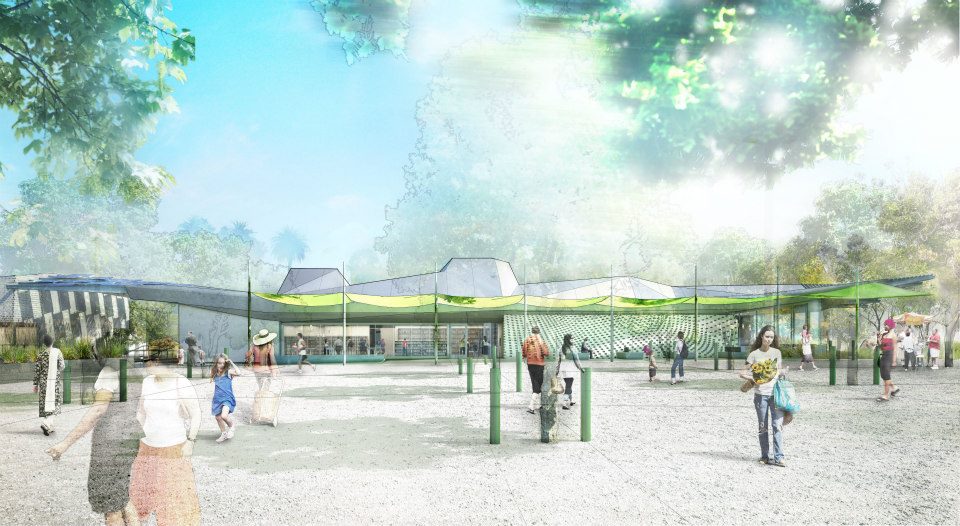
Above Photo: “Pico Branch Library broke ground last week at Virginia Avenue Park, Santa Monica… The Pico Branch is slated to be the first LEED Platinum library in Los Angeles when it opens in November 2013. View renderings of the library here.”

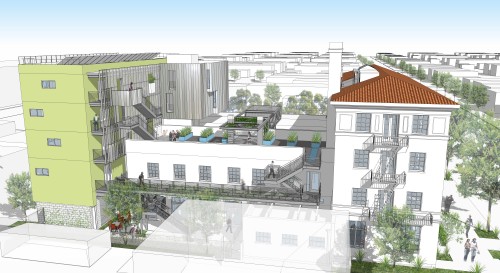
Below Photo: “28th Street Apartments historic restoration and addition for Clifford Beers Housing is just about finished! The original YMCA, designed by noted African American architect, Paul Williams in 1926, is being carefully restored and will offer  community services and supportive housing.”

We wish them a very fun time at the gala this evening. Well deserved!

Follow Koning Eizenberg Architecture on Twitter for future announcements. Remember, “Architecture isn’t only for special occasions!”

Item contributed by Alicia Igram of a/e ProNet Member firm IOA Insurance Services in Aliso Viejo, California.