[youtube http://www.youtube.com/watch?v=Hdpf-MQM9vY&w=560&h=315]

In this video, you can watch the construction of a 30-story apartment building in less than 3 minutes. That’s the beauty of time-lapse technology. But the reality is also super fast. The apartment building, comprised of 30 floors built in sections, “each measuring 15.6 by 3.9 meters, with a depth of 45 centimeters,” was built from the ground up in just 15 days.

“Zhang Yue, founder and chairman of Broad Sustainable Building, is not a particularly humble man,” writes Lauren Hilgers in her recent piece for Wired magazine. “A humble man would not have erected, on his firm’s corporate campus in the Chinese province of Hunan, a classical palace and a 130-foot replica of an Egyptian pyramid. A humble man, for that matter, would not have redirected Broad from its core business—manufacturing industrial air-conditioning units—to invent a new method of building skyscrapers. And a humble man certainly wouldn’t be putting up those skyscrapers at a pace never achieved in history.”

The efficiency made possible by this copy-paste style of construction could change the way whole cities are designed in China, the country with the highest population in the world. But what impact will it have elsewhere? And what are the risks of such speedy construction?

In October 2012, Evan Osnos wrote Boss Rail, an article for the New Yorker magazine which revealed the flaws in China’s recent high-speed rail boom.

“In 2003, China’s Minister of Railways, Liu Zhijun, took charge of plans to build seventy-five hundred miles of high-speed railway—more than could be found in the rest of the world combined… With a total investment of more than two hundred and fifty billion dollars, the undertaking was to be the world’s most expensive public-works project since President Eisenhower’s Interstate Highway System, in the nineteen-fifties. To complete the first route by 2008, Minister Liu, whose ambition and flamboyance earned him the nickname Great Leap Liu, drove his crews and engineers to work in shifts around the clock, laying track, revising blueprints, and boring tunnels… When the first high-speed line débuted with a test run in June, 2008, it was seventy-five per cent over budget and relied heavily on German designs.”

On July 23, 2011, lightning struck a signal box outside the city of Wenzhou, and gave one of the high-speed trains a green light rather than a red on. The resulting crash killed 40 people and injured 192. It was this tragedy that forced China to take a closer look at what turned out to be a highly pressurized process, hobbled by the corruption of government officials, as well as the illegal practices of wealthy citizens.

Sacrificing oversight and transparency for speed is a concern, especially since China is already in the architecture world’s line of fire these days due to frequent accusations of copyright infringement (Creative China, Cutting and Pasting?). In a recent example, the New York Daily News wrote, “Already famed for fake designer bags and pirated DVDs, imitation in China may have reached new heights with a set of towers that strongly resemble ones designed by renowned architect Zaha Hadid.”

But Hadid might be the first to remind her counterparts that the existence of China’s specific market, even taking into account the political structure and shaded history, is beneficial. She has worked extensively in China, crediting the country as a major influence on her evolution and success as an artist. In a November 2012 piece published by Newsweek, author Melinda Liu quotes Hadid as saying, “Every country has its local requirements. In China, the requirement is to be big. Where else can you get this scale? That’s its Chineseness.”

Whether this latest exercise in speed and efficiency will be primarily positive for the world of architects, engineers, and builders remains to be seen.

october_pronetwork_newsThe following is an excerpt of Part 2 in this two-part series. In Part 1, author Eric Singer covered Veni (I went to the site) and Vidi (I observed for general conformance with design intent).

Lis Pendens – I got sued anyway

Sometimes observable deficiencies get missed, or the timing, relative solvency or insured status of the parties and plain old bad luck conspire to force you to defend your compliance with the standard of care. In tort claims (injuries, property damage or other calamities), most states have procedural mechanisms to apportion fault among the parties or to add parties potentially at fault. Contract lawsuits are different and an owner could choose to pursue the A/E and leave the contractor alone or to settle and join forces with the contractor. In contract cases, many jurisdictions make it difficult for an architect to pursue claims against a contractor without a direct contract. You can defend by blaming the contractor’s “empty chair” or try a more aggressive approach. The general conditions may provide you with some ammunition.

General Conditions frequently contain a warranty in favor of both the owner and the architect. The AIA A201 (2007), for example, provides “The Contractor warrants to the Owner and Architect that materials and equipment furnished under the Contract will be of good quality and new unless the Contract Documents require or permit otherwise. The Contractor further warrants that the Work will conform to the requirements of the Contract Documents and will be free from defects, except for those inherent in the quality of the Work the Contract Documents require or permit.” (A201 – 2007, §3.5). Interpretation of this provision and rights of the architect in these circumstances varies greatly state to state. If viable in your state, a warranty claim against the contractor may prevent the owner and contractor from settling cheap or joining forces against the design team.

To read about Vici, I conquered, visit our website where you may download the full PDF version of this October 2012 issue (and all previous issues) of our ProNetwork Newsletters.

About the Author: Eric Singer is a partner at Ice Miller, LLP. He concentrates his practice in construction law, with emphasis on the representation of architects, engineers, contractors, owners, and lenders as well as other professionals, in litigation and alternative dispute resolution of design and construction issues. Mr. Singer, who was awarded his J.D by the University of Chicago Law School, is a former Professional Affiliate Director of the American Institute of Architects of Chicago and is a member of multiple bar associations and design professional groups. Recently ranked as AV Preeminent by Martindale-Hubbell and listed in The Best Lawyers of America, Construction Law, by those peer-review organizations, Eric is an active speaker and prolific author on the subject of construction litigation and the liability of the design professional. Contact Eric Singer at: eric.singer@icemiller.com

Don’t forget to contact your local a/e ProNet broker if you have any questions!

In 2013, Professional Liability insurance provider Victor O. Schinnerer will host independent subject-matter experts for four webinars, all geared toward Architects, Engineers, and other Design Professionals:

Computer-aj_aj_ashton_01.svgEmployment Liability Issues in a Recovering Economy

February 13, 2013, 1:00 – 2:00 pm eastern

Thomas L. McCally, Esq., Carr Maloney, P.C., Washington, DC

Design firms face various types of employment liability issues during the normal course of business. However, the downturn and subsequent recovery of the economy have brought these issues to the forefront of concerns for design firms. An attorney expert in litigating design firm employment practices claims will discuss the issues firms need to recognize as the economy improves and firms prepare to staff-up for the recovery.

Business Models and Financial Opportunities in a Recovering Economy

April 10, 2013, 1:00 – 2:00 pm eastern

Michael O’Brien, ASA, Rusk, O’Brien, Gido + Partners, Washington, DC

From funding sources to procurement procedures, the financial environment for professional services has significantly changed since the pre-recession economy. Both in the public and private sectors, the rules, risks, and routes to financial success are different. Professional services firms need to adjust their business plans to remain viable and to benefit from the opportunities in a recovering economy. Specializing in solving the business management and ownership challenges of consulting firms, our expert will share thoughts on the needs and responses of firms in the new service environment.

Technology Risks for Design Professionals

September 11, 2013, 1:00 – 2:00 pm eastern

David J. Shannon, Esq., Marshall, Dennehey, Warner, Coleman, Goggin, Philadelphia, PA

Technology risks associated with the business operations and professional services of design professionals is not new. However, the increased use of building information technologies and collaborative delivery methods, such as integrated project delivery, may increase the exposure of firms to traditional technology risks, as well as introduce new risks. Join our discussion with an attorney expert in technology risks to learn what exposures design firms need to be aware of and how to manage those exposures.

Insurance and Legal Questions for the Collaborative Design Team

October 9, 2013, 1:00 – 2:00 pm eastern

Rebecca H. Farnum, Esq., Thompson & Bowie, LLP, Portland, ME

Building information modeling and integrated project delivery provide a platform through which all members of the design and construction team collaborate. As with all new technologies and delivery methods, there are important questions the collaborating team should ask to identify and respond to legal and insurance issues in the open transfer of information in a contractual arrangement of shared risk and reward. Our expert will discuss what types of questions the team should ask before formally entering a collaborative agreement.

Visit our website to download the full PDF version of the 2013 Victor O. Schinnerer webinar schedule.

Fa-la-la-la-la La-la La LA!

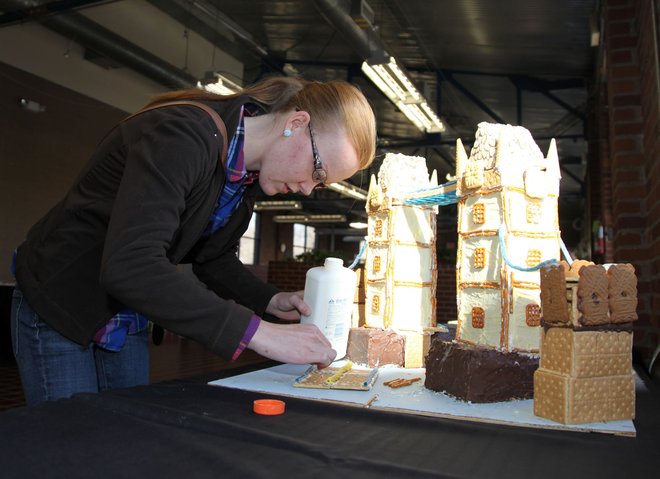
Gingerbread used in architectural engineering competition

Tristen Black makes some repairs on her gingerbread building Thursday at the Tulsa Alliance for Engineering competition. She won first place in adult category. STEPHEN PINGRY/Tulsa World

Santa visits the Living Roof at the Cal Academy of Sciences

A pair of reindeer graze on the undulating 2.5-acre living roof that tops the Renzo Piano-designed museum. (In lieu of a chimney, Santa uses an operable skylight.) Photo courtesy of the Cal Academy of Sciences.
Reindeer graze on the undulating 2.5-acre living roof that tops the Renzo Piano-designed museum. (In lieu of a chimney, Santa uses an operable skylight.) Photo courtesy of world-architects eMagazine

Whether you celebrate Christmas, or Hanukkah, or anything else this season, we at a/e ProNet wish you a happy, safe holiday. We hope you spend it with the people you love.

100 Years of Zurich

zurich100years_adA treat for Architects, Engineers, and roller coaster enthusiasts alike.

In 2012, Zurich Insurance celebrated their 100th anniversary. A century spent insuring people, places, and things has given the company a fascinating historical perspective, from covering one of the rides at the Chicago World’s Fair to utilizing special training to help employees handle the first computers.

Visit 100 Years Insuring America, Zurich’s special anniversary web feature, to explore the last century through the eyes of one of the country’s leading insurance companies. Check out cool black and white photos, old advertisements, and a timeline organized by decade.

“Zurich first brought its knowledge and experience in workers’ compensation insurance from Switzerland to America in 1912 to help its customers take intelligent risks.” Today, “Zurich employs about 60,000 people serving customers in more than 170 countries.” Read more about Zurich at their website.

Learn more about Zurich’s insurance program for Design Professionals here. And if you have any questions or if you’re interested in obtaining a quote from Zurich, contact your local a/e ProNet broker today!

Excerpted from the September 2012 issue of ProNetwork News, part one of a two-part series:

pronetworknews_sept2012What if Caesar had written “I came to the project site, I observed for general conformance with the Contract Documents but not for means or methods or work covered since my last visit” and then wrote a three word report? Caesar was a master of understatement and understatement leads to misunderstandings and, well, understatement. Architects have always faced liability for undiscovered construction defects but current economic times have forced many contractors out of business. With the typical lack of contractor insurance for defective work, A/E’s are the only solvent or insured pocket, leaving design professionals more vulnerable to construction defect claims than in the past.

Veni – I went to the site

Those preaching risk reduction used to urge that architects and engineers leave construction administration to construction managers and contractors. This approach allowed or even encouraged contractors, CMs, program managers and owner’s representatives to take market share for services formerly performed by A/E’s. It also missed the point. Design professionals do not seek to eliminate liability, but to manage the reasonable risks of design practice. Reasonable risks are those placed with the party able to control them.

If an owner wants an A/E to ensure perfect construction, the project is doomed to fail for two reasons. First, there hasn’t been perfect construction since the Pyramids (and they had different labor and insurance agreements in those days). Second, the A/E does not control all of the variables that go into a construction project. There are elements of construction installed and concealed by the time the A/E arrives for a weekly or monthly meeting and site tour and even the most gifted A/E is powerless to see through walls. Continue reading “Veni, Vidi, Vici, Lis Pendens: I came, I saw, I got sued – Part 1 of 2”

It’s true. The insurance industry has a reputation for bringing doom and gloom to an otherwise cheery outlook. Forgive us. Our business relies on our being able to spot negative trends in advance so that we can assist our clients in preparing for the worst. That doesn’t mean we don’t also hope for the best! Economic recovery is still ongoing, and we are thrilled that this means our architect and engineer clients are working and growing again.

That’s why, in our May 2012 post, To Hire or Not to Hire?, we mentioned some of the considerations and concerns facing design firms as they take on work that “could require additional hands,” including the need for accurate Professional Liability limits on their insurance policies… just a little worth-thinking-about-in-advance gloom.

Then this week, leading Professional Liability insurance provider, Victor O. Schinnerer, released its most recent Risk Management Guidelines, including an item on the Expanding Employment Liability Risks of recovering architecture and engineering firms.

“As firms downsized to face an economic downturn and restructured due to changing technology and new project delivery systems that required altered business models, employment practices claims rose. Add to that the challenges presented by the new generation of employees—many of whom consider their lives and the operations of their employers as public information, and a number of whom find the workplace to be a forum for their opinions—who are flooding the market during difficult economic times, and by returning military who must be accommodated in their former civilian positions or given preferential treatment, and firms are faced with a demanding and confusing employment perspective as they begin to staff up.”

Continue reading “Expanding Employment Liability Risks for Design Firms”

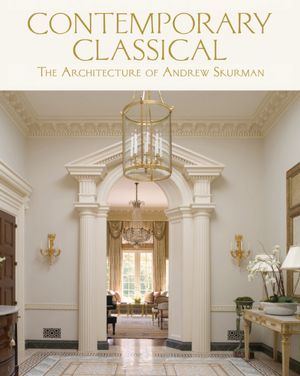
Homes designed by a/e ProNet client Andrew Skurman have been featured in a wide variety of publications, including Architectural Digest, The New York Times Magazine, Western Interiors, California Homes, San Francisco Magazine, This Old House, Luxe. Interiors + Design, House Beautiful, and Gentry Design. Work by the firm is also included in the books Napa Valley Style (2003) by Kathryn Masson and San Francisco Style (2004) by Diane Dorrans Saeks. And now, Andrew Skurman has a book of his own!

In August, Princeton Architectural Press published Contemporary Classical — The Architecture of Andrew Skurman.

Excerpted from Princeton’s website:

“Skurman draws on an extensive architectural library of European and American design with the precision of an eminent art historian, skillfully adapting timeless design elements to suit today’s lifestyles. Collaborating with well-respected contractors, interior and landscape designers, lighting and audiovisual experts, and other consultants, Skurman blends modern comfort and conveniences into traditional settings. Featuring gorgeous photography and exquisite watercolor studies, Contemporary Classical showcases an exceptional range of residential work, including projects in San Francisco (Nob Hill, Pacific Heights), the Newport Beach coast, and Northern California.”

ProNet first got wind of Skurman’s new publication from lifestyle blogger The Style Saloniste who said, in her “fall preview”:

“San Francisco architect Andrew Skurman’s new book is essential for the collections of architectural students, interior designers, potential clients, and everyone who wants to learn about classical architecture—the real thing.”

And the San Francisco Chronicle’s review of Contemporary Classical was a rave!

“One of the guilty pleasures in reading coffee-table books about stunning residences is trying to determine which homes are pictured. Locals will have fun guessing from among the 20 anonymously featured in a new book by one of San Francisco’s most respected architects. [The book] features 255 pages of colorful photos of residences inspired by his love of French chateaux and classical Greek and Roman forms….”

The book retails for $60.00, but can be purchased now on Amazon for $37.80, and would make an excellent gift for your favorite architect. Happy shopping!

Item contributed by Leslie Pancoast of a/e ProNet Member firm IOA Insurance Services in Pleasanton, California.

“My big question for Architecture is, Why do humans have to adapt to buildings? And why can’t Architecture adapt to humans?”

Doris Kim Sung

[youtube=http://www.youtube.com/watch?feature=player_embedded&v=-Ms5qoMO3gQ]

It is in the very nature of a trend to move on past its point of highest enthusiasm and fizzle out in favor of something else. Architecture, like everything else, goes through these periods of interest and inclination. For a long time, Sustainable Architecture–environmentally conscious design–was considered the latest trend. Now that trend is evolving.

Resilient Architecture takes the ideas behind sustainable design a step further. Metal That Breathes is one of the latest evolutionary byproducts of the new trend, and is best evidenced by the work of Architect Doris Kim Sung of the University of Southern California.

Inspired by her original interest and education in Biology, Sung used so-called “smart metal” to design and build her Bloom installation in Los Angeles. As Sung pointed out in her recent TED talk, “[Skin is] the first line of defense for the [human] body… Our building skins should be more similar to human skin.”

One author on the Core77 design blog explained Sung’s work this way:

Sung has been experimenting with thermo-bimetals, two thin layers of metal that expand and contract, in response to temperature, at different rates. Laminating two like-sized sheets of different material together and subjecting them to a temperature change causes the sheet to curl up—and this phenomenon can be exploited to create a building that ingeniously shades itself as needed, requiring no external power.

Sounds crazy, no? And it’s possible that the American market is not yet ready to explore the possibilities of this breathing metal in its regular buildings. But as Sung mentioned in her recent TED talk, at least one Chinese developer is already including the thermo-bimetal screens in its design for a house. The screens “can actually open and close as the sun moves around on that surface,” said Sung. “[This implies] that we don’t need shutters, or drapes, or blinds anymore… we can control the amount of air conditioning you need inside that building.”

Watch Sung’s Metal That Breathes TED Talk (and hear about how the breathing capabilities of grasshoppers factor into her research!) here:

[youtube=http://www.youtube.com/watch?feature=player_embedded&v=wvIyVZf3qZU#!]

And in case you’re wondering about the deeper implications of this kind of beyond-the-basic-sustainability philosophy, I’ll leave you with this quote from a recent Treehugger.com blog post entitled Building Green Is No Longer Enough, It is Time To Build Resilient:

It turns out that many of the strategies needed to achieve resilience–such as really well-insulated homes that will keep their occupants safe if the power goes out or interruptions in heating fuel occur–are exactly the same strategies we have been promoting for years in the green building movement. The solutions are largely the same, but the motivation is one of life-safety, rather than simply doing the right thing. We need to practice green building, because it will keep us safe–a powerful motivation–and this may be the way to finally achieve widespread adoption of such measures. — Alex Wilson, founder of BuildingGreen